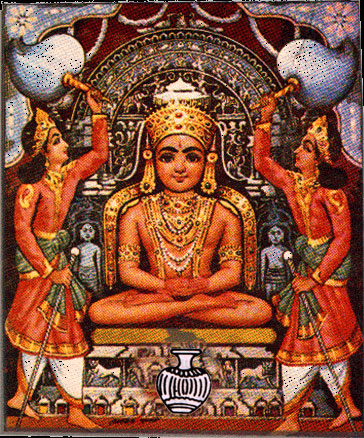
Reverent depiction of Mallinath Bhagwan in serene meditation
A Sacred Biography

The Tirthankara of Mithila

Mallinath Bhagwan stands among the twenty-four luminaries who, in this descending half-cycle of cosmic time, have illuminated the eternal path to liberation. His life is not chronicled in the manner of mortal histories but is held in the hearts of the faithful as a living archetype of inner sovereignty — a soul that walked the earth as a king’s child, yet belonged entirely to the realm of the awakened.

The Jain tradition holds his life as a pearl of paradoxes — born to the highest worldly station, he renounced it without a tremor; surrounded by abundance, he saw clearly the fragility of all that is named, owned, and named again.
19th
Tirthankara
Mithila
Sacred Birthplace
Ikshvaku
Royal Dynasty
Moksha
Final Liberation
I · Royal Origins

Born to the House of Kumbha

Mallinath Bhagwan was born in the prosperous kingdom of Mithila to the noble King Kumbha and the radiant Queen Prajavati. The royal household belonged to the celebrated Ikshvaku dynasty — a lineage of dharmic kings whose names recur across the great spiritual narratives of Bharatavarsha. Tradition holds that fourteen auspicious omens visited the queen during pregnancy, signalling the descent of an extraordinary soul.

II · A Childhood of Light

The Prince Who Saw Beyond Palaces

Even as a young prince, Mallinath’s presence is described as deeply contemplative — composed beyond his years, untouched by the customary delights of royal life. The court chronicles speak of a child who looked at gold and saw transience, who walked through gardens and saw the cycle of seasons, who sat in council and listened more to the silence than to the words.

His refinement was not aloofness; it was the clarity of one whose inner life ran far deeper than the world around him.

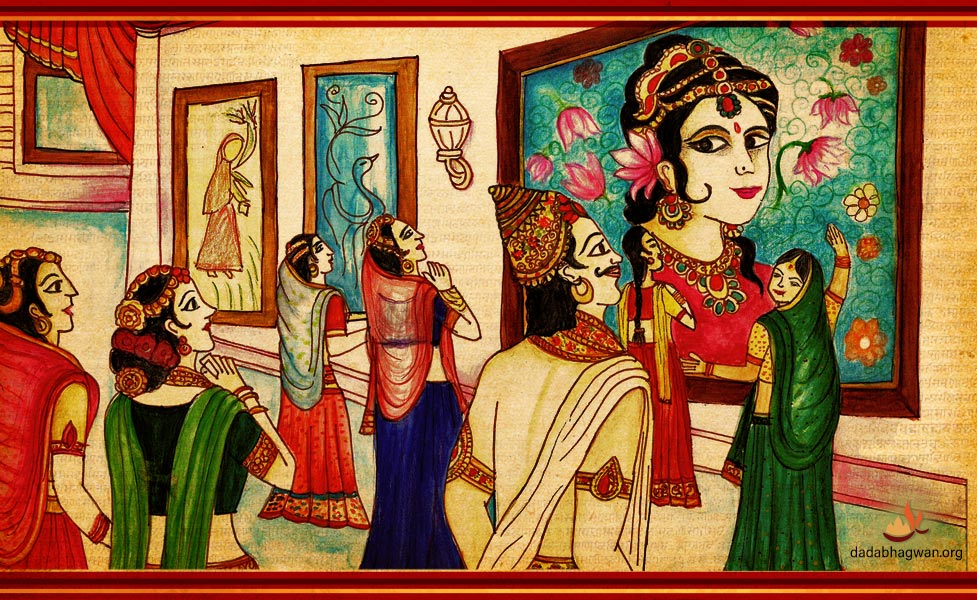
Young Mallinath in the royal palace of Mithila
Mallinath Bhagwan as a Tirthankara, source of Kevala Jnana
III · The Turn Within

From Sovereign to Seeker

An incident — described variously across the sacred texts — became the gateway for Mallinath’s renunciation. Where another would have grieved or sought distraction, he saw an unmistakable mirror of impermanence and resolved to walk away from every worldly inheritance. He left the kingdom with the same grace with which he had entered it — without lament, without theatre, with a quiet step toward the eternal.

Ascetic life, profound meditation, and the cultivation of supreme equanimity culminated in the dawn of Kevala Jnana — the omniscience that knows all substances in all their modes, across all time.

A Singular Reverence

Held Sacred in Two Streams

Among all twenty-four Tirthankaras, Mallinath holds a place of unique theological significance — revered through two complementary lenses.

Svetambara Tradition

Mallinath as Female Tirthankara

The Svetambara tradition reveres Mallinath as a woman who attained perfect omniscience — a profound testament to the spiritual sovereignty of the soul beyond the categories of gender. Her life is narrated as a luminous example that the path to liberation is open without distinction to every awakened being.

Digambara Tradition

Mallinath as Male Tirthankara

The Digambara tradition reveres Mallinath as a male ascetic who, through total renunciation and inward austerity, dissolved every karmic veil to attain Kevala Jnana. His example illuminates the unflinching simplicity of the path of the “sky-clad” renunciate — a soul stripped of every external claim.

Both traditions, held in mutual reverence, illuminate one shared truth: Liberation transcends every form, every name, every category the world places upon the soul.

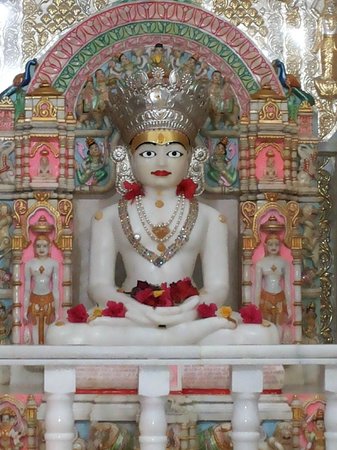
Sacred portrait of Mallinath Bhagwan venerated in temples
IV · Spiritual Significance

A Living Inspiration for Modern Devotees

For seekers of every age, Mallinath Bhagwan is a constant reminder that the true throne is the inner one. In a world that hurries to claim, accumulate and prove, the Tirthankara’s example offers the rare counsel of letting go — an inward release that becomes the doorway to lasting peace.

His shrines — particularly at the venerated tirths associated with his name — remain places of pilgrimage, study and silent communion. Devotees gather not merely to remember a life that was, but to be touched by the timeless presence that always is.

“To remember a Tirthankara is to remember the soul’s own light.” — A Jain reflection
Continue the Pilgrimage

Walk the Divine Journey

Trace the sacred milestones of Mallinath Bhagwan’s life — from royal birth to the ultimate liberation.

Enter the Journey